Start the 7-Day Champion Mindset Challenge
Overcoming Competition Nerves in
Young Athletes
Does Your Child Train Brilliantly but Struggle on Competition Day?
We help young athletes manage competition nerves, build confidence, and perform at their
best under pressure. Many young athletes perform well in training but struggle
to show their true ability when it matters most.
As competition approaches they may experience:
Butterflies in their stomach
Racing thoughts
Fear of making mistakes
Worry about letting others down
Lack of confidence
Difficulty focusing
Parents often tell me:
"I know what my child can do in training, but they seem like a completely different athlete when they compete."
If this sounds familiar, your child is not alone.
Competition nerves affect athletes at every level, from beginners to world champions.
The good news is that nerves are normal and can be managed.

Why Do Young Athletes Get Nervous?
Competition creates uncertainty.
Athletes may worry about:
Winning or losing
Making mistakes
Being judged by others
Letting parents or coaches down
Comparing themselves to other competitors
Not meeting their own expectations
These thoughts create stress.
When stress increases, performance often suffers.
The goal is not to eliminate nerves completely.
The goal is to learn how to perform well despite them.
Are Competition Nerves a Bad Thing
Not necessarily.
Even elite athletes experience nerves.
In fact, many top performers expect to feel nervous before important events.
Nerves often mean:
You care
You are excited
You are stepping outside your comfort zone
You are challenging yourself
The key difference is that successful athletes learn how to channel those
feelings into performance.
Signs Competition Nerves May Be
Affecting Your Child
You may notice:
Difficulty sleeping before events
Stomach aches before competitions
Negative self-talk
Emotional outbursts
Lack of confidence
Avoiding competitions
Underperforming compared to training
If these patterns continue, confidence can begin to suffer. Many athletes experiencing competition anxiety also benefit from confidence coaching for young athletes.
Practical Strategies to Manage
Competition Nerves
Control What You Can Control
Focus on Preparation
Training effort
Practice consistency
Following routines
Personal improvement
They can control:
Effort
Attitude
Preparation
Focus
Athletes cannot control:
Opponents
Judges
Weather
Results
Rather than focusing purely on results.
Our Competition Day Confidence Checklist provides simple techniques athletes can use before events.
Champions learn to focus on what they can influence.
Use Positive Self-Talk
Replace:
"I might mess up."
With:
"I am prepared."
Replace:
"What if I lose?"
With:
"I will give my best effort."
Small changes in language can create powerful changes in confidence.
How Parents Can Help
Parents play a huge role in managing competition pressure.
Helpful phrases include:
"I'm proud of your effort."
"Go and enjoy yourself."
"Focus on doing your best."
"Let's learn from the experience."
Avoid placing too much emphasis on results.
Young athletes thrive when they feel supported regardless of outcome.
Parents can also download the Parent's Guide to Supporting Young Athletes to better support their child before and after competitions.
My Experience as a Parent and Coach
I understand competition nerves from both sides.
As a coach, I have worked with athletes building confidence and resilience.
As a parent, I have supported my own son Tyler through national and international competition, helping him develop the mindset needed to perform under pressure and eventually become a 20-time World Champion.
One thing remains true at every level:
Confidence is not about never feeling nervous.
Confidence is learning to trust yourself despite the nerves.
Many of these techniques have been used throughout
Tyler Killoran's journey as a 20-time World Champion.
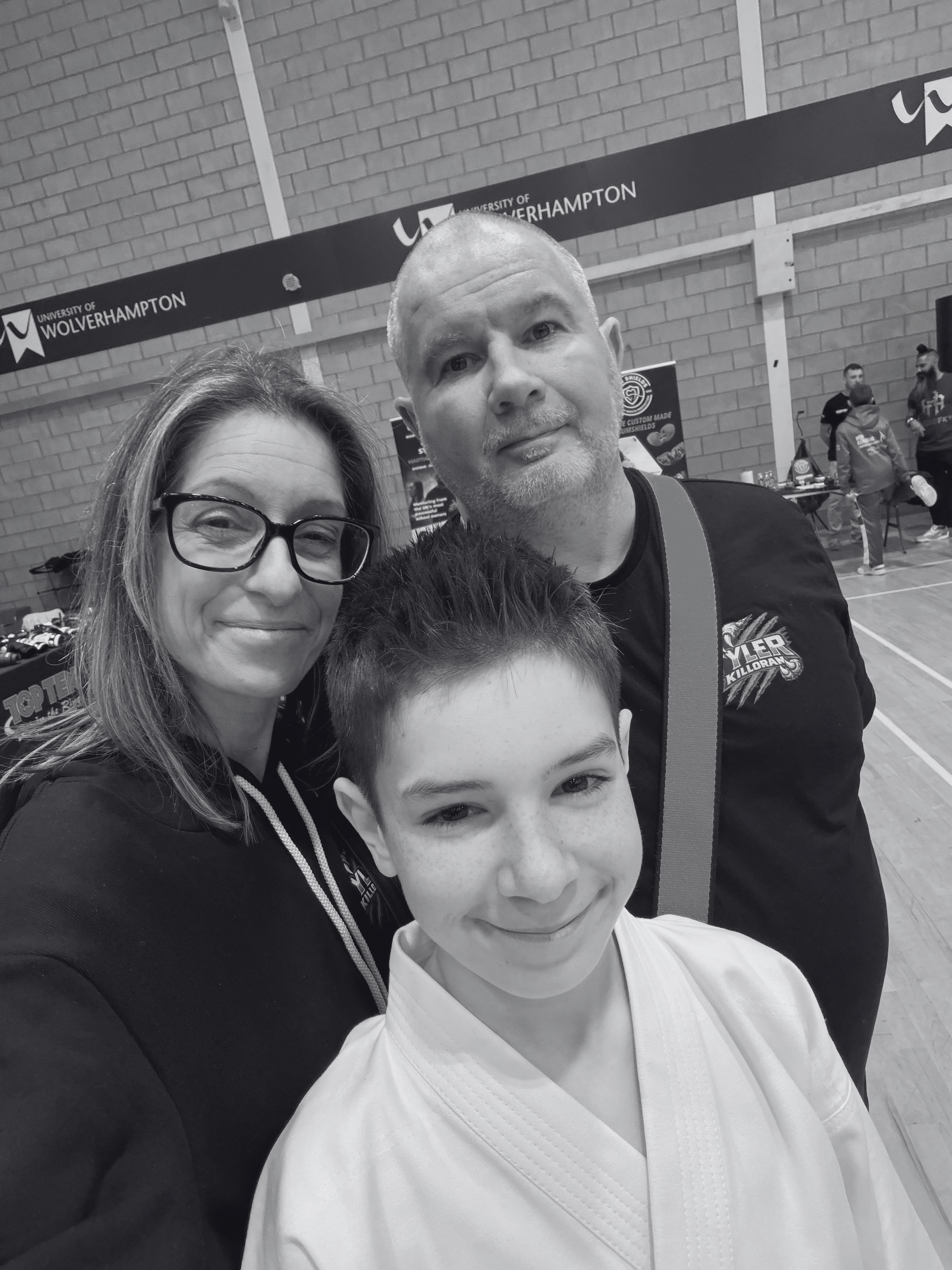
Parents can learn more about me and my approach to developing
confident young athletes here.
Ready to Help Your Child Compete
With Confidence?
If your child struggles with nerves, pressure or self-belief, mindset coaching can help.
Book a free Champion Mindset Strategy Call and discover how we can help your child develop the confidence and resilience of a champion.
Our Champion Mindset coaching programmes help athletes develop the mental skills needed to handle pressure and perform consistently.
FAQ
Why does my child perform well in training but struggle in competition?
Many young athletes perform differently in competition because the pressure, expectations, and emotions are much higher than during training. They may worry about making mistakes, letting people down, or achieving a certain result. Mindset coaching helps athletes develop confidence, focus, and emotional control so they can perform closer to their true ability when it matters most.
Are competition nerves normal?
Yes. Competition nerves are completely normal and are experienced by athletes at all levels, including elite performers and world champions. Feeling nervous often means your child cares about their performance. The goal is not to eliminate nerves completely, but to learn how to manage them and perform confidently despite them.
Can mindset coaching help with sports anxiety?
Yes. Mindset coaching provides practical tools that help young athletes manage nerves, reduce negative thinking, improve confidence, and stay focused under pressure. Athletes learn strategies that can help them feel calmer, more prepared, and more resilient before and during competitions.
What age is mindset coaching suitable for?
Champion Mindset coaching is suitable for young athletes from approximately 8 years old through to late teenagers. Coaching is adapted to the athlete's age, sport, experience level, and individual needs to ensure the strategies are easy to understand and apply.
How quickly can athletes improve their confidence?
Every athlete is different, but many young athletes begin noticing improvements in confidence, focus, and emotional control within a few weeks of consistently applying the mindset tools they learn. Lasting confidence develops over time through practice, repetition, and positive experiences.